On September 15, 1974, a group of Soviet non-conformist artists gathered in an empty lot in Belyayevo. This group of artists, led by Oscar Rabin and Evgeny Rukhin, attempting to finally expose the works of underground and unofficial artists of the USSR. “Unofficial” artists of the USSR were those who dared to work against the only acceptable style of art in the Soviet Union, Socialist Realism. Since its official acceptance as the sole artistic style of the USSR, artists were given the choice between working with and for the government or dealing with the consequences of working against them. Many artists began working against the grain in secrecy and holding small exhibitions in their apartments, mainly attracting other artists and relatives. Apartment exhibitions required cautious execution, in order to avoid any trouble with the KGB. Therefore, actually having an exhibition in a vacant lot was an important affair.

Group of unofficial artists, the Moscow Conceptualists
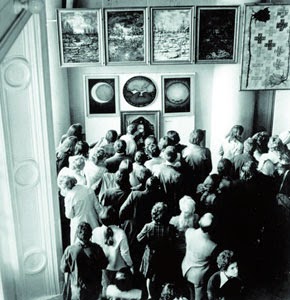
Unofficial artist Koryun Nahapetyan’s art exhibit in his apartment
The ill-fated exhibition’s name, the Bulldozer Exhibition, reflects upon the incidents that occurred during the only day of exhibiting art. The irony is that artists asked for legal permission and received it! They were told that the lot is available for use and the display of their modern and avant-garde works is not a worrisome matter. Little did these artists know that their works would be destroyed so quickly.

Water truck documented attacking the exhibition visitors
Using bulldozers, water trucks, and dump trucks, Soviet authorities pillaged the vacant lot, destroying most of the art and injuring artists, journalists, and innocent bystanders. Authorities beat and arrested artists and journalists, including three American correspondents. As this was the first time unofficial artists attempted to exhibit artwork in the public, news of the Bulldozer exhibition spread quickly, causing much distress to art lovers across the globe. Dissatisfaction with the happenings were brought to the Soviet’s attention, and in a pity attempt to fix their mistake, they offered the artists an empty space to display their art on a Saturday. Rabin refused, stating that Sunday would be the only acceptable day for their exhibition.

Oscar Rabin, Bouquet of Daisies, oil on canvas, 1969
For decades, the USSR has persecuted, imprisoned, exiled, and arranged “accidental” deaths for numerous artists, writers, and thinkers. So how, after decades of oppression and murders and cover ups, can Soviet authorities even attempt to fix their mistake? Clearly, they were decades late in attempting to find peace with avant-garde artists exploring modern movements.
Side note: These artists, writers, and thinkers included Evgeny Rukhin (artist; reports say he died of carbon monoxide poisoning, although his wife believes this is another KGB cover up), Koryun Nahapetian (artist; shot in his studio in 1999, after the collapse of USSR, though some believe it is still related), Sergei Parajanov (artist and filmmaker; falsely imprisoned for many unnecessary reasons), Paruyr Sevak (poet; said to have died of a car crash, although people believe it was another KGB cover up). [These are simply names I can think of on the top of my head]
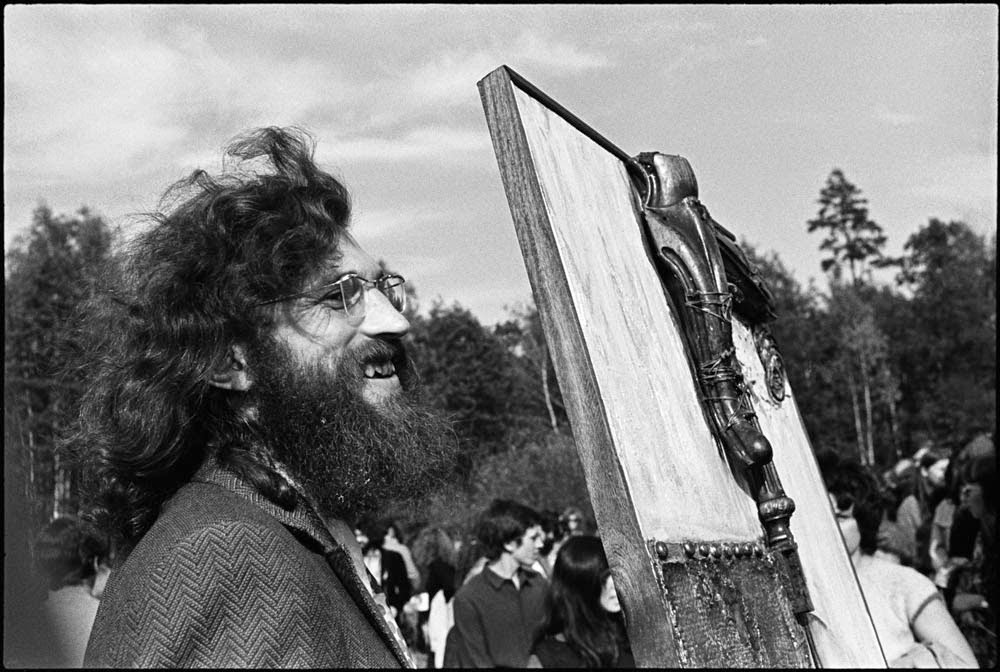
Evgeny Rukhin
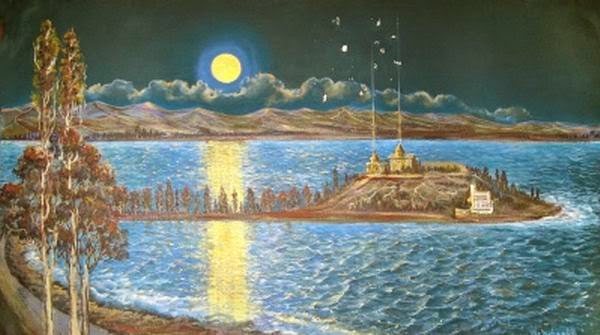
Koryun Nahapetian, Lake Sevan
Not so fun fact: When Koryun Nahapetian was shot in his studio in 1999, this painting was in the studio. There are holes in the painting as a result of the gunshots.
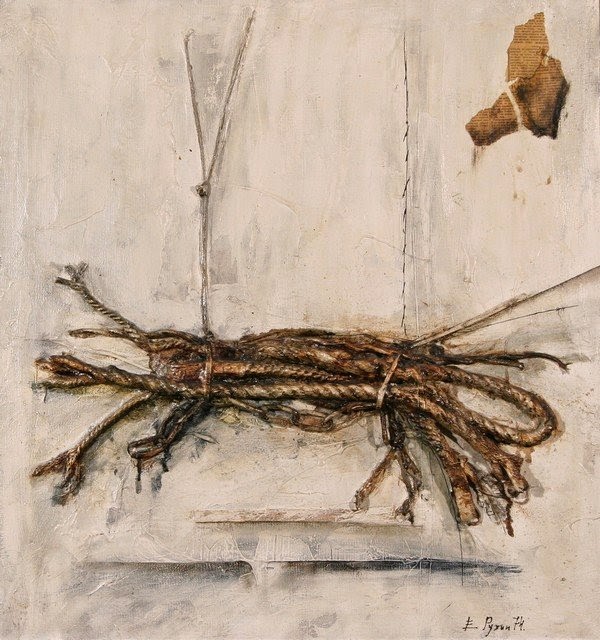
Evgeny Rukhin, Untitled, mixed media on canvas, 1974
The Bulldozer Exhibition is a crucial page in history. When I speak about my avid interest in USSR official and unofficial art to people, I find that some are uncomfortable with my interests, assuming that I agree with the actions of the Soviet Union. I do not; I believe in the cause of the underground and unofficial artists, and I commend and respect all the selfless artists who have dedicated their work and their lives to the advancement of modern art in a society that shunned all nonconformists. Artists that have died in the hands of Soviet authorities, artists who attempted to escape the USSR and come to America, and artists who saw hundreds of their artworks burn in front of their eyes; some are rarely discussed. For instance, Koryun Nahapetyan who is an amazing nonconformist artist, a sociologist, a philosopher, and a political activist who took part in the Bulldozer Exhibition, has a short biography on Wikipedia and nothing else. Evgeny Rukhin, one of the organizers of the Bulldozer exhibition, similarly only has a minimal amount of information online.These artists deserve more; all the work they have done in their lifetimes is buried underneath the red-plagued Siberian snow.
Unofficial art history is still history. Bulldozers can ruin artworks and gunshots can kill people, but the message will always carry on.
 theUNTITLED