Oannes: Evolution of the Fish-God

I was looking through the texts and research of the late Lester Bridaham at work, which he gathered for his famous book, Gargoyles, Chimeres, and the Grotesque in French Gothic Sculpture (reprinted by Dover Architecture as The Gargoyle Book: 572 Examples of Gothic Architecture). Bridaham had conducted extensive research on European Gothic architecture and mythological creatures, including basilisks, unicorns, and mermaids. On a small index card, he had written the name Oannes, which struck me immediately for many purposes. Firstly, I had not heard of such a myth before and I was tempted to learn more. Second, Oannes sounds just like Hovaness (Armenian for John), which is a common Armenian name. Until now, I assumed Hovaness is a Biblical name (John the Baptist). However, I had never known the history of the name goes back much further. And finally, Mr. Bridaham conducted research on Oannes because he was a merman; does this mean that Oaness may have been the first Merman in the history of mythology (at least that’s what Bridaham believes!)?

oannes[3]

Oannes depicted in an Egyptian style headdress
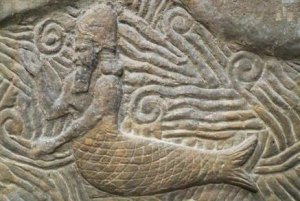
The story of Oannes was first documented by the Babylonian priest/writer Berossus, who wrote three books on the history and culture of Babylonia. His text served as an important source for later Greek historians, and thus his works survive only in fragments. Of the many things Berossus provided was his text on the fish-god Oannes, who has said to have resided in the Persian Gulf. Oannes was described to have the head of a fish and the legs of a man. Although in later times his description might have shifted to that of the mermen and mermaids we know today – a human’s torso and a fish’s tail. However, if you look closely at the detail on his head, you might notice that it is, in a sense, a fish head ‘hat.’ He rose from the sea every morning and taught mankind writing, art, and science, then proceeded to go back into the ocean at nights.

2881145

Oannes Relief

Ancient gods, no matter how ridiculous and unusual they may be to us, do not die out with the kingdom they belong to. [And I’m not just talking about ancient god/alien conspiracies!] Links between ancient religious deities are always present. For instance, Varuna, the water god of Vedism and in Hindu mythology, is almost identical to Oannes. Many times, Oannes was also depicted wearing an Egyptian style headdress in the form of a fish, rather than being half-human, half-fish.

varuna

Varuna


The story of Oannes may even be where the story of John the Baptist originated from. John the Baptist is mentioned in many Western religious texted and is most widely known for his practice of Baptism to wash away all sins. Most visual depictions of John the Baptist show him near a body of water. Thus, there can only be a conclusion that there is a clear connection between the ancient Babylonian god of water and knowledge and John the Baptist.
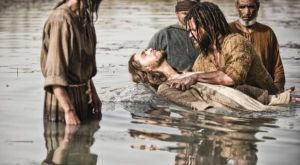
John-the-Baptist-and-Jesus1

John the Baptist and Jesus

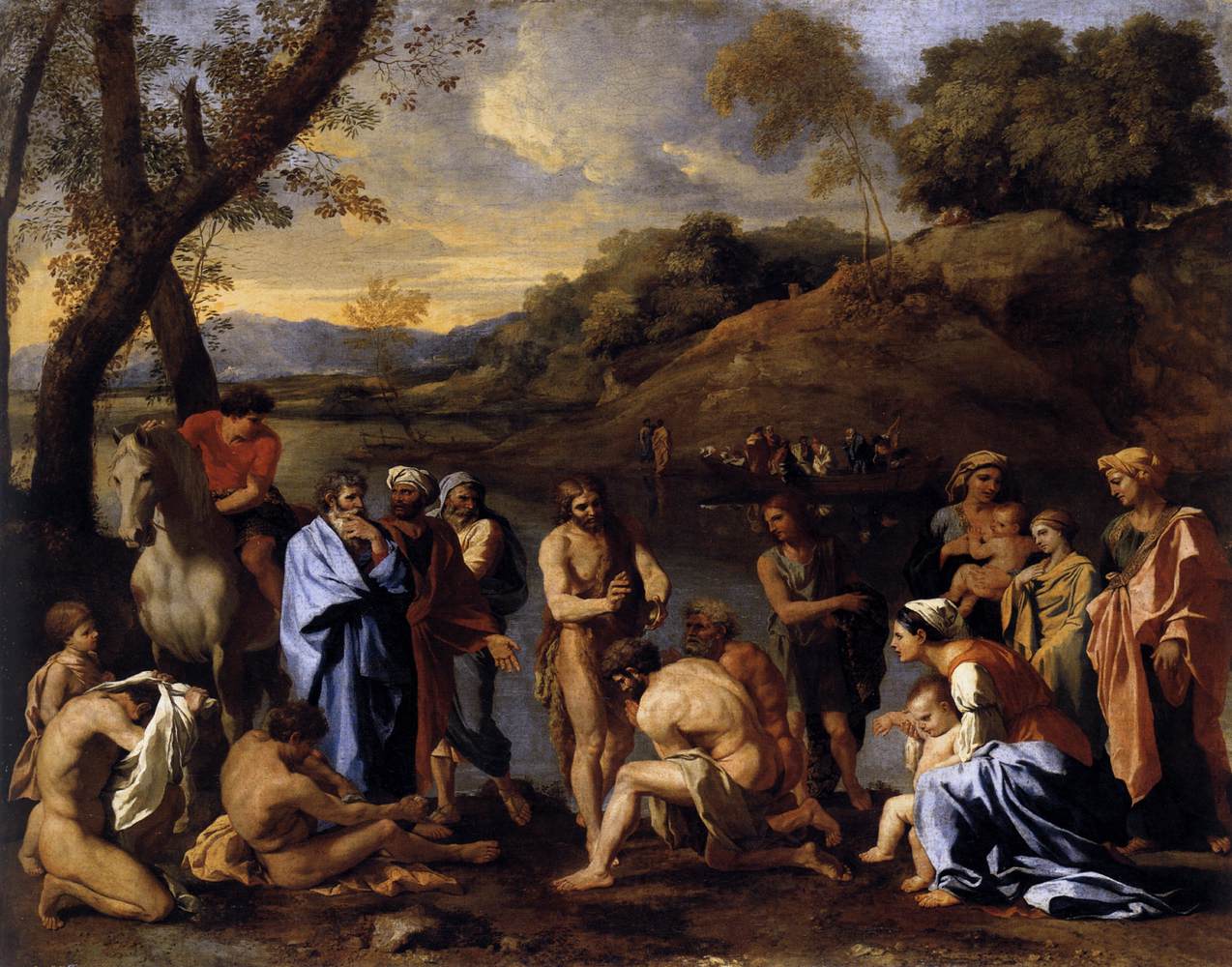
For instance, in this painting by Nicolas Poussin, a French baroque painter, Saint John the Baptist is baptizing citizens. Because people were illiterate, the best way to show Biblical stories was through imagery. In the center is Saint John. Even if the viewer was not familiar with religious figures, Poussin has positioned the bodies and gazes of surrounding figures towards St. John. Furthermore, just in case the viewer was wondering what in the world is Saint John’s story, Poussin had placed him near a body of water to make the relation clear. Therefore, St. John the Baptist is the Biblical reincarnation of Oannes.
Nicolas_Poussin_-_St_John_the_Baptist_Baptizes_the_People_-_WGA18294

Nicolas Poussin, St. John the Baptist Baptizes the People, circa 1635

Oannes is not only depicted in religious paintings as the reincarnated John the Baptist. There are also modern accounts of Oannes’s depictions in art and literature. Recognized primarily for his literary masterpiece Madame Bovary, Gustave Flaubert worked thirty years on a lengthy retelling of the Temptation of Saint Anthony. In the books, Flaubert’s research of ancient creatures and gods are quite apparent. Oannes, was one of the creatures mentioned.

“Respect me! I am the contemporary of beginnings. I dwelt in that formless world where hermaphroditic creatures slumbered, under the weight of an opaque atmosphere, in the deeps of dark waters—when fingers, fins, and wings were blended, and eyes without heads were floating like mollusks, among human-faced bulls, and dog-footed serpents.”

As a visual companion to the piece, Odilon Redon, a French symbolist painter and printmaker, composed a series of illustrations on the temptation of St Anthony. I don’t want to get too deep into Redon’s illustrations, because I’ll probably delve deeper into Redon’s work in a later post. However, I do want to mention Redon’s Oannes illustration.


Odilon Redon, Oannès: Moi, la première conscience du chaos, j'ai surgi de l'abîme pour durcir la matière, pour régle (Oannès: I, the First Consciousness of Chaos, Arose from the Abyss to Harden Matter, to Regulate Form) from La Tentation de Sainte-Antoine (The Temptation of Saint Anthony) (plate XIV), 1896

Odilon Redon, Oannès: Moi, la première conscience du chaos, j’ai surgi de l’abîme pour durcir la matière, pour régle (Oannès: I, the First Consciousness of Chaos, Arose from the Abyss to Harden Matter, to Regulate Form) from La Tentation de Sainte-Antoine (The Temptation of Saint Anthony) (plate XIV), 1896

Centuries after Berossus’ description, Oannes is yet again depicted in art. Surrounded by an abyss, Oannes is depicted as a simple head on a swirled tail-like body. Redon’s Oannes is a modern, dark, and grotesque rendering of the Oannes depictions on Babylonian architecture. I also think it is very interesting how the depiction of Oannes as the fish-god has evolved over time. As some point, he was regarded as the god of wisdom and education. In Redon’s title, he is considered the “Consciousness of Chaos.” “Consciousness of Chaos” essentially is knowledge, but the diction has attributed Oannes’s knowledge and skills to negativity.


This is possibly the first time that I have been so enamored with ancient mythology. I’ve always had an interest, but unlike this. As I type my final words, I also notice something –

Isn’t it odd how mermen have evolved in folklore and art? Oannes, as one of the earliest forms of a merman and fish-god, is depicted to be strong, knowledgeable, and even as the “First Consciousness of Chaos.” Quite powerful for a semi-human fish. On the other hand, the beautiful mermaids are only attributed to evil, floods, and shipwrecks…


Back to Oannes… He’s one interesting mythological character who, has constantly remained present, evolving in art, mythology, and literature. Art History interrelates with mythology and folklore, thus allowing people to study this evolution through visual imagery, whether they were depicted in ancient Babylon, Baroque France, or 19th century France.
When Painting Died

When looking at art, what does one first look at? Subject matter, form, technique, colors? The beauty of having control of the canvas is that the artist also has control of what to emphasize in the work.

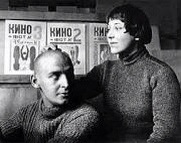
Alexander Rodchenko, a Russian avant-garde artist, was born in St. Petersburg to a working class family in 1891. As a child of a working class family, he truly believed in the Communist cause, he eventually gave up paining in favor of photography in the 1920s.

20140526-120821-43701746.jpg

Alexander Rodchenko and his wife, 1920s

Rodchenko was one of the early figures of the Constructivist movement, alongside his wife Varvara Stepanova. The term “Constructivism” was not actually used until the October Revolution of 1917. Constructivism also had a more industrial ring to it, straying away from the compositional nature of art that they were trying to avoid. Constructivism meant to heighten spacial and constructivist elements of art in an era of technological advancements, rather than flaunting ostentatious and unnecessary details in art. Constructivism in Russia was initially started by Vladimir Tatlin in 1914, and continued by Alexander Rodchenko and his counterparts.

The 5×5=25 exhibition, which included artists Rodchenko, Varvara Stepanova, Lyubov Popova, and constructivists, introduced the new reality of art working in accordance with the Communist ideologies. Paintings were included in the exhibition, but only if they were sketches for spacial compositions or served a Constructivist purpose.

20140526-120923-43763789.jpg

Alexander Vesnin, 5×5=25 Exhibition catalogue cover

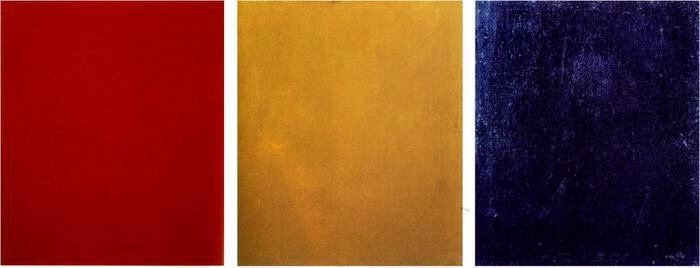
In 1921, Rodchenko painted Pure Red Color, Pure Yellow Color, and Pure Blue Color , as his last three paintings, which were a part of the 5×5=25 exhibition. In an era filled with pure egalitarian hopes and expectations, Rodchenko believed that traditional methods of painting and sculpting were dead and bourgeois. Years later, Rodchenko recalled that the monochromatic triptych was the representation of the essence of painting in the purest state, as well as the end of painting for himself and in general.

I reduced painting to its logical conclusion and exhibited three canvases: red, blue and yellow. I affirmed: it’s all over.
Basic colors.
Every plane is a plane and there is to be no representation.

20140526-121058-43858299.jpg

Alexander Rodchenko, Pure Red Color, Pure Blue Color, Pure Yellow Color, 1921

Painting is in essence, basic colors. Rodchenko’s triptych of the early twentieth century is a great representative piece of the end of painting in the traditional sense. The Constructivist movement is one of the final greatest movements in Russia before the emergence of Socialist Realism as the sole art form of the USSR.

Rodchenko’s triptych is a predecessor to Minimalism and monochromatic paintings. Although some similarities exist between future monochromatic paintings and Rodchenko’s triptych, the essence of Rodchenko’s “Pure” paintings is political. Even if the system was a failed experiment, artists truly believed in the cause and were completely dedicated their art to the promotion of a Communist state.


As Rodchenko said, “artists are catalysts for social change.”

The Bulldozer Exhibition: Aritst Exposure Gone Wrong

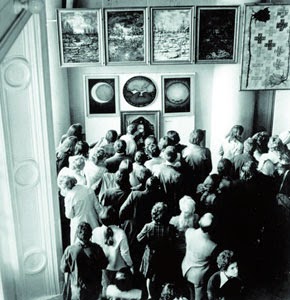
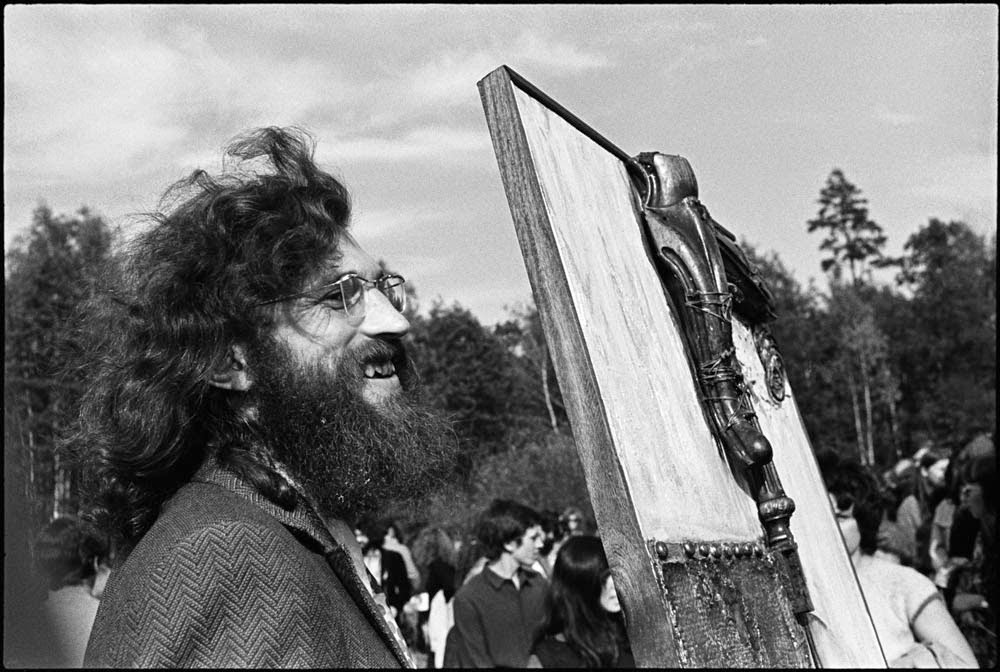
On September 15, 1974, a group of Soviet non-conformist artists gathered in an empty lot in Belyayevo. This group of artists, led by Oscar Rabin and Evgeny Rukhin, attempting to finally expose the works of underground and unofficial artists of the USSR. “Unofficial” artists of the USSR were those who dared to work against the only acceptable style of art in the Soviet Union, Socialist Realism. Since its official acceptance as the sole artistic style of the USSR, artists were given the choice between working with and for the government or dealing with the consequences of working against them. Many artists began working against the grain in secrecy and holding small exhibitions in their apartments, mainly attracting other artists and relatives. Apartment exhibitions required cautious execution, in order to avoid any trouble with the KGB. Therefore, actually having an exhibition in a vacant lot was an important affair.

Group of unofficial artists, the Moscow Conceptualists  

Unofficial artist Koryun Nahapetyan’s art exhibit in his apartment

The ill-fated exhibition’s name, the Bulldozer Exhibition, reflects upon the incidents that occurred during the only day of exhibiting art. The irony is that artists asked for legal permission and received it! They were told that the lot is available for use and the display of their modern and avant-garde works is not a worrisome matter. Little did these artists know that their works would be destroyed so quickly.

Water truck documented attacking the exhibition visitors

Using bulldozers, water trucks, and dump trucks, Soviet authorities pillaged the vacant lot, destroying most of the art and injuring artists, journalists, and innocent bystanders. Authorities beat and arrested artists and journalists, including three American correspondents. As this was the first time unofficial artists attempted to exhibit artwork in the public, news of the Bulldozer exhibition spread quickly, causing much distress to art lovers across the globe. Dissatisfaction with the happenings were brought to the Soviet’s attention, and in a pity attempt to fix their mistake, they offered the artists an empty space to display their art on a Saturday. Rabin refused, stating that Sunday would be the only acceptable day for their exhibition.

Oscar Rabin, Bouquet of Daisies, oil on canvas, 1969 

For decades, the USSR has persecuted, imprisoned, exiled, and arranged “accidental” deaths for numerous artists, writers, and thinkers. So how, after decades of oppression and murders and cover ups, can Soviet authorities even attempt to fix their mistake? Clearly, they were decades late in attempting to find peace with avant-garde artists exploring modern movements.

Side note: These artists, writers, and thinkers included Evgeny Rukhin (artist; reports say he died of carbon monoxide poisoning, although his wife believes this is another KGB cover up), Koryun Nahapetian (artist; shot in his studio in 1999, after the collapse of USSR, though some believe it is still related), Sergei Parajanov (artist and filmmaker; falsely imprisoned for many unnecessary reasons), Paruyr Sevak (poet; said to have died of a car crash, although people believe it was another KGB cover up). [These are simply names I can think of on the top of my head]

Evgeny Rukhin

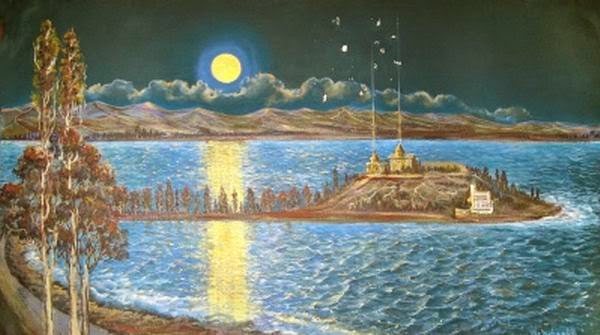
Koryun Nahapetian, Lake Sevan 

Not so fun fact: When Koryun Nahapetian was shot in his studio in 1999, this painting was in the studio. There are holes in the painting as a result of the gunshots.

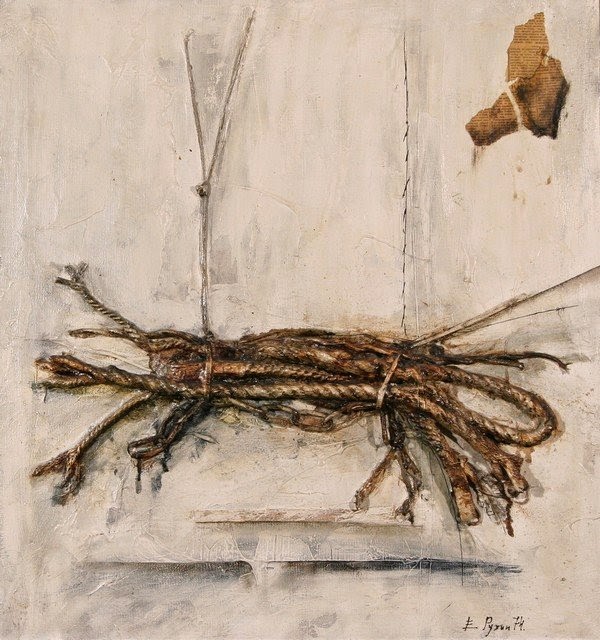
Evgeny Rukhin, Untitled, mixed media on canvas, 1974

The Bulldozer Exhibition is a crucial page in history. When I speak about my avid interest in USSR official and unofficial art to people, I find that some are uncomfortable with my interests, assuming that I agree with the actions of the Soviet Union. I do not; I believe in the cause of the underground and unofficial artists, and I commend and respect all the selfless artists who have dedicated their work and their lives to the advancement of modern art in a society that shunned all nonconformists. Artists that have died in the hands of Soviet authorities, artists who attempted to escape the USSR and come to America, and artists who saw hundreds of their artworks burn in front of their eyes; some are rarely discussed. For instance, Koryun Nahapetyan who is an amazing nonconformist artist, a sociologist, a philosopher, and a political activist who took part in the Bulldozer Exhibition, has a short biography on Wikipedia and nothing else. Evgeny Rukhin, one of the organizers of the Bulldozer exhibition, similarly only has a minimal amount of information online.These artists deserve more; all the work they have done in their lifetimes is buried underneath the red-plagued Siberian snow.

Unofficial art history is still history. Bulldozers can ruin artworks and gunshots can kill people, but the message will always carry on.

Spotlight on Igor Savitsky: The Legend

At a young age, I read the book “կայծեր (Sparks)” by Raffi, one of the legendary Armenian novelists. The novel was about young Armenian revolutionaries standing up and fighting for their rights. The chosen title name is very appropriate: when the hammer hits hot metal, it creates sparks. Those sparks were the revolutionary men standing up for what they believed in and pursuing it. 

 Without a doubt, the same can be said about avant-garde and non-conformist art under totalitarian rule. Under the pressures and limitations of totalitarian art arises legendary artists who create abstract visual commentaries that reflect upon on their lives and capture what is in their souls.

Just as Hitler attempted to silence abstract artists through humiliation (recall “Entartete Kunst [Degenerate Art]” and physically destroying artworks, the Soviet government silenced artists who strayed away from the USSR’s officially and only acceptable art style, Socialist Realism.

USSR, however, did not always silence artists. For the first decade, before the official decree of Socialist Realism, avant-garde artists, such as Alexander Rodchenko were dedicated to the USSR while having the freedom to explore avant-garde art. 

The early twentieth century brought many social and political changes to Russia. The Russian Revolution of 1917, led by the Bolshevik leader Vladimir Lenin, promised a utopian egalitarian state with a Socialist government. The new Russian state promised social, political, and economic equality to the working class by overthrowing a previously bourgeois and hierarchical political system. As a newly emerged government that concentrated on the welfare and needs of the lower classes, it was inevitable that they also needed to recreate Russian culture to suite the needs of the general public. They attempted to restructure the arts with two specific goals. Art, which was once specifically reserved for the upper class, was made available for the enjoyment and use of the masses. Second, art was seen as a propaganda tool, convincing people to believe in the heroism of the Soviet government and leaders. Introduced in the 1920s and officially decreed in 1934, the newly emerged Soviet government introduced Socialist Realism as the sole official genre of art and literature. The Soviet Union expected art to depict Soviet reality in its dialectical qualities. For instance, the depiction of the triumphs of the working class and the process to get to the Revolution were primary subjects of artworks. Socialist Realism may have depicted what was real, which was the triumph of the working class over the upper class, but it did not depict the truth of Soviet life; the truth of Soviet life was poverty, hunger, and depression.


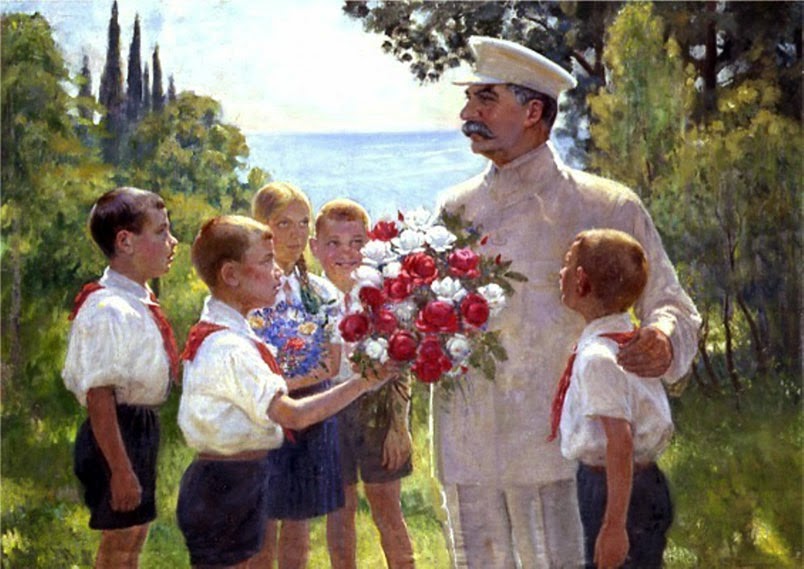
Boris Vladimirski, Roses for Stalin, 1949, oil on canvas

Socialist Realism was a method of idealizing reality and bending the truth to fit the needs of the Soviet government. Socialist Realism, although carefully chosen by the well educated and elite, was supposedly to emphasize the traditionalist tastes of the masses, returning art to classical techniques that attempted to represent reality “accurately.” With such traditional notions in mind, Socialist Realism was specifically aimed at painting.

Avant-garde and abstraction is far from reality, particularly the idealized reality that the USSR was demanding from artists. Artists who strayed away from Socialist Realism were condemned, exiled, tortured, or watched all their artworks burn to the ground.

One man, however, helped stop that. One man sent by the gods of avant-garde art attempted to save these artworks from such a tragic end. That man was Igor Savitsky. If the artist is going to be exiled and face inevitable death, then why not save their works?  

Igor Savitsky is a fascinating figure in the history of Communist Art. Born in 1915 in Kiev, Igor Savitsky was the child of a quite wealthy family. During the October Revolution, Savitsky’s family was targeted and thus he hid his identity by “transforming” into a proletariat. He had always been interested in art, and created some artworks of his own. However, his artworks received heavy criticisms, and he eventually gave up painting altogether when he became the director of the Karakalpak Museum. However, he never lost his appreciation and love for avant-garde art, even though it was the works of others.

Savitsky began collecting millions of Russian and Central Asian avant-garde works and saving them in the deserts of Uzbekistan. Eventually, this desert oasis became an actual museum (Karakalpak Museum), housing over 90,000 artworks and various textiles, jewelry, and artifacts of Central Asian cultures. By convincing Soviet authorities that Karakalpakstan needed an art museum, he was given the funding and the position of founding director of the cultural institution.

However, art and heat do not mix well together. Thus, Savitsky single handedly tried to maintain his collected artworks, eventually leading to his own death. Imagine; working to preserve these artworks so tirelessly it became the reason for all your health issues. Even then, Savitsky did not stop his work. In the Moscow hospital were he spent the last days of his life, Savitsky continued his research and writings on art for the Karakalpak Museum. 

Savitsky is a gem, an angel sent by the art gods to help preserve culture that was on the verge of extermination. 

Hitler’s rejection from the art conservatory drove him to torture millions of people; Savitsky’s led him to save critical artworks of the underground Soviet avant-garde artists, even if they cost him his life. 

I’m thankful for people like Savitsky; without him and other like-minded individuals, the world would not know about all the timeless avant-garde pieces that were created during the Soviet era.  

If you’re interested in learning more about Igor Savitsky, I recommend watching the Desert of Forbidden Art by Amanda Pope, who happens to be a Professor of production at USC’s School of Cinematic Arts. I own the documentary myself, and I can honestly say it’s one of my favorite documentaries out there.

The Cruelest Month: Arshile Gorky

“April is the cruelest month, breeding/ Lilacs out of the dead land, mixing/ Memory and desire, stirring/ Dull roots with spring rain.” – T.S. Eliot, The Waste Land

As Genocide Awareness month, for at least once a year we are united to remember the deaths of 1.5 million ancestors and the displacement of the rest. April is the cruelest month, but it does breed lilacs our of dead land. Out of April’s ashes rose a magnificent culture of Armenian art, music, and literature. 

Arshile Gorky. Possibly the most well known Armenian artist in the Diaspora of the twentieth century. Gorky was born Vostanik Manuk Adoian in Khorgom of Lake Van. At the age of four, in 1908, his father emigrated to America in order to avoid the draft. In 1915, Gorky, his mother, and three sisters fled their village. In 1918, Gorky’s beloved mother died from starvation in the capital of Russian-controlled Armenia, Yerevan. At the age of 16, in 1920, Gorky emigrated to America to live with his father.  The atrocities experienced during the Genocide, as well as the tragic death of his mother, carried on with Gorky through the rest of his life and were reflected in his artwork.

After arriving in America, he changed his name in order to reinvent his identity. By the end of his life, Gorky was claiming that he was related to the writer Maxim Gorky, although there is no relation aside from his chosen last name. 

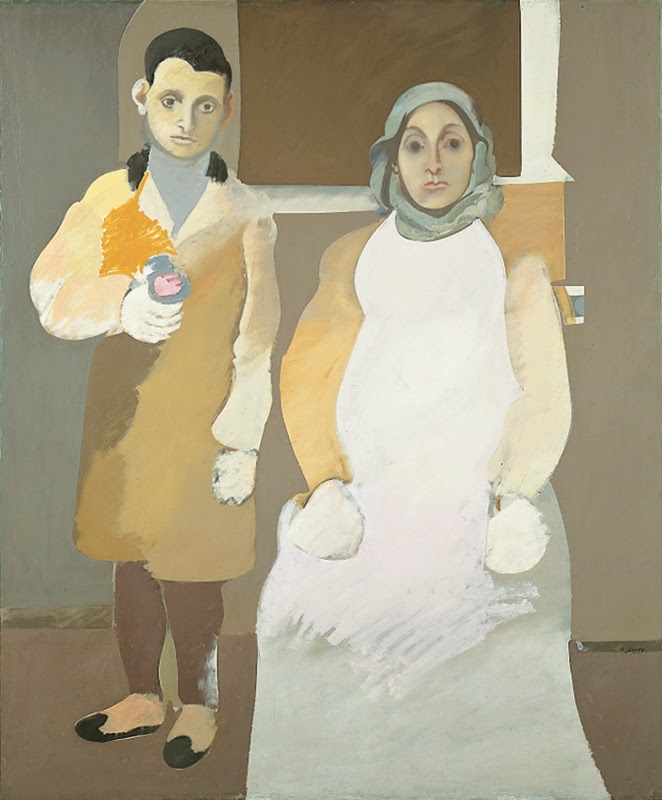
Gorky’s most well-known painting, The Artist and His Mother, (1926-1936), is a rendition of the very last photograph he had taken with his mother. There are so few portraits in this world which I believe to have a powerful aura. Amongst the portraits of Alberto Giacometti, Johaness Vermeer, and similar artists, I would have to say that this portrait is absolutely captivating. In the eyes of young Gorky are deep despair, yet in the eyes of the mother is a pride in her homeland, her heritage, and a will to stay strong for the children she must raise alone in a war-torn land. As opposed to the history and the drama of the photograph, the color choices are soft and hazy. To me, the soft colors are a representation of the last piece of a long gone memory. 

Portrait of Artist and Mother, Photograph

Arshile Gorky, Portrait of Artist and Mother, 1926-1936

However, note that the hands are erased, as well as the flowers of his mother’s dress and in his hand. Gorky has eliminated any piece of positivity that could have altered the depiction of their deeper, psychological distress. There is something very discomforting about the absence of hands. They are not covered with black paint, a color often related to death and mourning. Instead they are white, the color of purity and peace. White-erased hands, and distressed faces…


Born in April, 1904, yet reborn as an Artist in 1915. Gorky is the symbolic beacon of hope that carried on by Genocide survivors through the twentieth century, and transformed into a cultural hero for the current generation, as well as generations yet to come.


In the midst of marches, vigils, and candle-lightings, let us all remember Gorky and the millions of others who left us. They left this world in pleas, but they produced and contributed to a culture that we should be proud of. We should pass along a culture of artists, musicians, and writers to the generations of Armenians yet to come. 

April is the cruelest month, breeding

Lilacs out of the dead land…


Staring Back: Giacometti’s Sickly Figures

I’m very sick today. Unfortunately, I’ve stayed home all day without a will to do anything. In the midst of all the sniffles and sneezes and reliving my childhood by watching thirteen year old Degrassi episodes (those good ol’ days!), I found myself thinking about Giacometti’s artworks…again. 


What is it about Giacometti that absolutely drives me insane?

Let me make a list:

  1. His sculptures
  2. His paintings
  3. His life
  4. His models talking about how psychotic he is in the studio
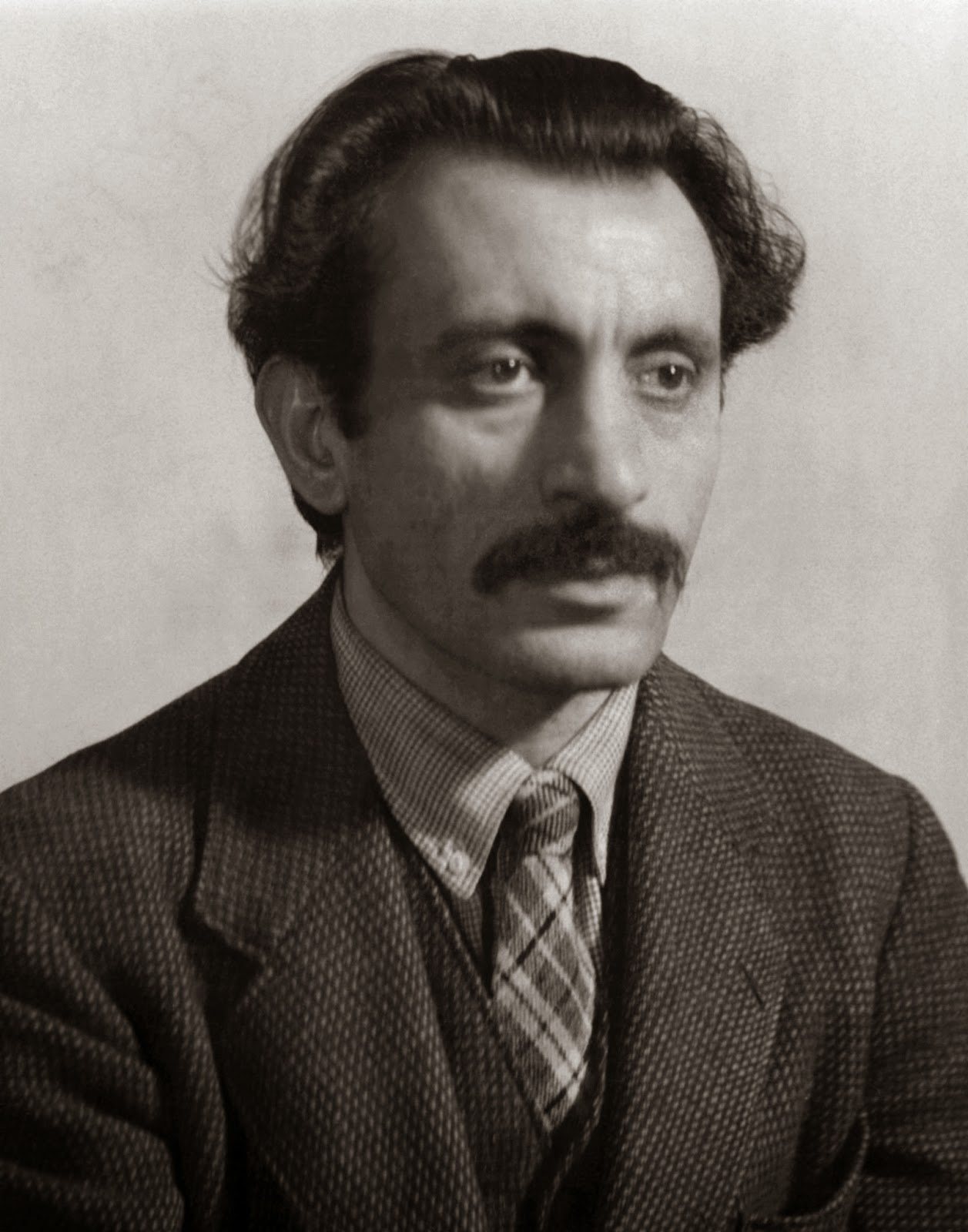
  5. He may or may not resemble my favorite Armenian poet, Paruyr Sevak (images below)

And the list goes on and on…

Alberto Giacometti (1901-1966)

Paruyr Sevak (1924-1971)


I think it’s safe to say that Giacometti is in my top 5 of greatest artists that ever lived! 

I actually wrote an essay on Giacometti’s use of space and void in his post World War II sculptures. You can read it here. [ps. I love this journal because it is the inaugural edition of the Art History Department’s journal and my friends wrote some amazing pieces for it too!] Yes, that was me shamelessly advertising our writings…

Back to Giacometti.

I closed my eyes and remembered LACMA’s collection of Giacometti’s sculptures. Now, LACMA does not allow photographs, because they do not own the collection (bummer); however, you can search “Giacometti LACMA” in Google and you’ll be able to see exactly what I mean [some awesomely sneaky people took pics!].

In my opinion, it is a very beautifully curated room. I’ve seen one of Giacometti’s sculptures in Norton Simon and MOCA as well, but I find LACMA’s choice to group them all on a “stage” is such an interesting display choice. [On a side note, I should mention this is clever because Giacometti had an obsession with stages and the theatre.] 

When we go to a museum, we observe artworks. We stare at them, with the knowledge and comfort that these objects have absolutely no way of responding to us. Even though the Mona Lisa and other like works, who’s eyes always follow the viewer, seems to stare back, she’s still framed off by the traditional use of a frame. Giacometti’s sculptures in LACMA are framed off as well, but they’re grouped on a stage, as if they were real figures or body parts petrified in that moment. No longer are we watching them; they are watching us

A. Giacometti, Large Seated Woman (Annette), 1958, Bronze, Sculpture, LACMA

 I can enter that room thousands of times, but I will never feel comfortable enough to view Giacometti’s anorexic figures as I would viewing Brancusi’s Bird in Space. But I must clarify that I find myself pleasantly uncomfortable; I keep going back to that room because I welcome this uncanny feeling.


C. Brancusi, Bird in Space, 1928, Bronze, Sculpture, MOMA

We enter gallery spaces, view art, critique them, and leave feeling quasi-cultured and somewhat satisfied. Giacometti’s sculptures don’t allow that; they critique us, as if to say, “Who are you to enter my space and judge how a mastermind has chosen to depict me?” This makes me think twice about how I look at art. Of course, a lot has to do with the curatorial decision to place the sculptures on an elevated stage, but it’s the vision of Giacometti that the curators are helping convey. Giacometti’s thin, sickly figures tear into my soul and completely take over my thoughts.


A. Giacometti, Tall Figure II and Tall Figure III, 1960, Bronze, Sculpture, MOCA

Every time I’m on that same second floor of the Ahmanson building in LACMA, I stop in that room and watch them and I welcome the cold and uncanny stares of Giacometti’s figures. Once I’m done with my spiritual meeting with Giacometti’s work, I finally feel free to move on to the next artist on my list at LACMA, Rothko…

Challenge: Marina Abramovic

I was introduced to Marina Abramovic’s work about two years ago. I’ve always appreciated her art, but for the past two weeks, her performances are all that I think about! I might just be writing my next paper on her…

Marina Abramovic is a Serbian-born performance artist who began her career in the 1970s. She challenges gender and societal norms, the boundaries of artist-audience relationships, the body, and the mind.

I recently watched a video of her speaking about her 1974 performance, Rhythm 0. She placed various objects on a table, from pleasurable objects, such as roses and honey, to violent and pain inflicting ones, such as knives and scissors. In fact, she even placed a gun with a single bullet on the table, to see how far the audience could take this experimental performance. There was a sign stating that the audience has the freedom to do whatever they’d like to her and they will not be responsible for their actions for the duration of the performance (6 hours). 


At first, people were gentle. Eventually, the audience began testing Abramovic’s determination. People began cutting her clothes, slicing her throat and drinking her blood. One man even held the gun to her, waiting for her to move away. She did not. 

Abramovic gave up control over herself to the audience. It took a while, but some did abuse the power she gave up. Some remained gentle, but others easily forgot to treat her with modesty when she handed them power. After six hours of abuse, Abramovic stood up and walked out, yet the violent audience ran off to avoid confrontation. How cowardly! 

Viewing an artwork is often a passive experience. In most cases, the artwork or performer is caged off from the audience. Breaking that barrier between the audience and the art is still such an uncanny experience that as viewers we do not know how to react. She’s not only testing the audience’s limits, but challenging the traditional notions of an audience-artist relationship. 

If given the opportunity, how will you react to a powerless human being? 

Step One, Redone

So I decided to switch over my blog to WordPress, and I decided to bring over everything, including my first introductory blog:

Before I begin posting my thoughts and observations, maybe I should introduce myself…

Hi! My name is Ani. I’m born and raised in Los Angeles, the city where art can be found both in and out of museums. I’m a student studying Art History and the Culture of New Technology. I love reading, writing, and discussing art and technology [and don’t even get me started on the clash of art and tech!]. Although I love all time periods in art history, my absolute favorite is twentieth century art, especially Soviet Socialist Realism and the Avant-Garde in the USSR! Marked by cruel Totalitarian governments, World Wars, oppression, and economic instability, the twentieth century yielded tortured souls who produced thousands of magnificent artworks.

But aside from all that art talk, I like spending my free time at museums, hiking, doing yoga, binge watching Netflix shows, and wine/beer paired with books, music, or friends. Sometimes I wish I had a pet! But a girl can dream…and blog!

So, why Untitled? Right before I created this blog, I was looking through an art book and I stopped at Mark Rothko’s Untitled (1960-1961). As a modern art history student/enthusiast, it’s impossible not to come across at least a dozen Untitled artworks in one book. Of course, his artworks are sublime! However this was the first time I was so fascinated by that word. UNTITLED. Oh, the irony. With so many Untitled artworks, they’re often distinguished with names or dates in parentheses. Yet, the artwork is Untitled. UNTITLED. It’s just echoing in my head now. I wonder if it’s echoing in yours now. UNTITLED.