“April is the cruelest month, breeding/ Lilacs out of the dead land, mixing/ Memory and desire, stirring/ Dull roots with spring rain.” – T.S. Eliot, The Waste Land
As Genocide Awareness month, for at least once a year we are united to remember the deaths of 1.5 million ancestors and the displacement of the rest. April is the cruelest month, but it does breed lilacs our of dead land. Out of April’s ashes rose a magnificent culture of Armenian art, music, and literature.
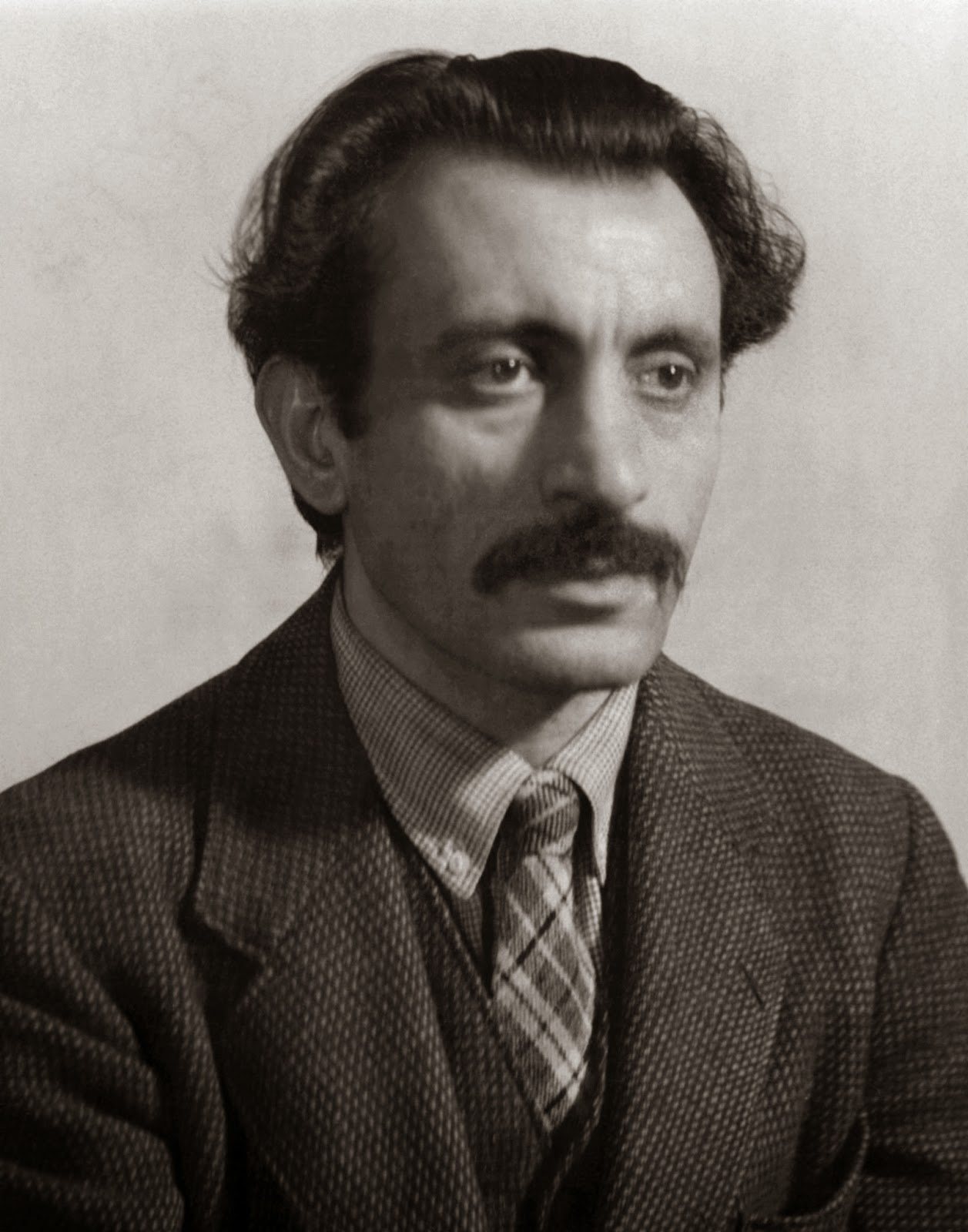 Arshile Gorky. Possibly the most well known Armenian artist in the Diaspora of the twentieth century. Gorky was born Vostanik Manuk Adoian in Khorgom of Lake Van. At the age of four, in 1908, his father emigrated to America in order to avoid the draft. In 1915, Gorky, his mother, and three sisters fled their village. In 1918, Gorky’s beloved mother died from starvation in the capital of Russian-controlled Armenia, Yerevan. At the age of 16, in 1920, Gorky emigrated to America to live with his father. The atrocities experienced during the Genocide, as well as the tragic death of his mother, carried on with Gorky through the rest of his life and were reflected in his artwork.
After arriving in America, he changed his name in order to reinvent his identity. By the end of his life, Gorky was claiming that he was related to the writer Maxim Gorky, although there is no relation aside from his chosen last name.
Gorky’s most well-known painting, The Artist and His Mother, (1926-1936), is a rendition of the very last photograph he had taken with his mother. There are so few portraits in this world which I believe to have a powerful aura. Amongst the portraits of Alberto Giacometti, Johaness Vermeer, and similar artists, I would have to say that this portrait is absolutely captivating. In the eyes of young Gorky are deep despair, yet in the eyes of the mother is a pride in her homeland, her heritage, and a will to stay strong for the children she must raise alone in a war-torn land. As opposed to the history and the drama of the photograph, the color choices are soft and hazy. To me, the soft colors are a representation of the last piece of a long gone memory.

Portrait of Artist and Mother, Photograph
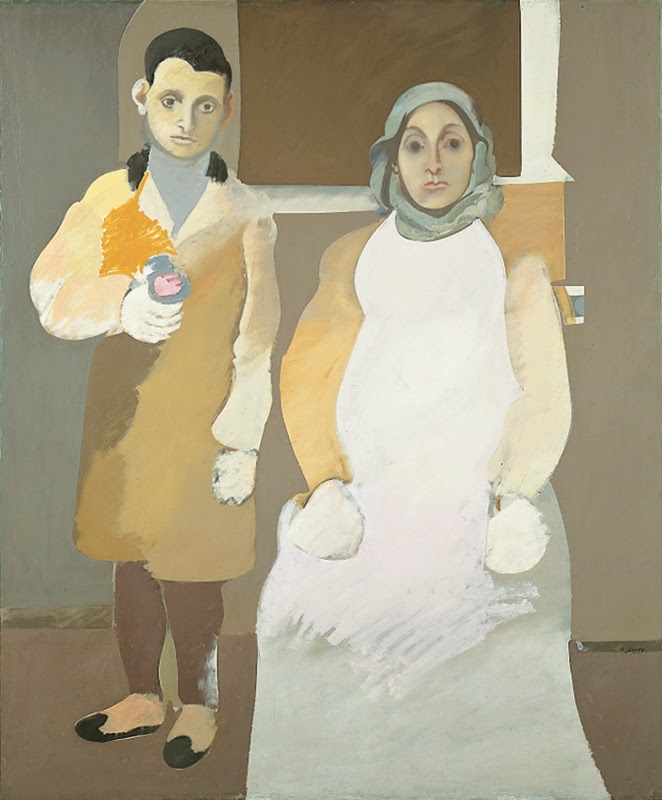
Arshile Gorky, Portrait of Artist and Mother, 1926-1936
However, note that the hands are erased, as well as the flowers of his mother’s dress and in his hand. Gorky has eliminated any piece of positivity that could have altered the depiction of their deeper, psychological distress. There is something very discomforting about the absence of hands. They are not covered with black paint, a color often related to death and mourning. Instead they are white, the color of purity and peace. White-erased hands, and distressed faces…
Born in April, 1904, yet reborn as an Artist in 1915. Gorky is the symbolic beacon of hope that carried on by Genocide survivors through the twentieth century, and transformed into a cultural hero for the current generation, as well as generations yet to come.
In the midst of marches, vigils, and candle-lightings, let us all remember Gorky and the millions of others who left us. They left this world in pleas, but they produced and contributed to a culture that we should be proud of. We should pass along a culture of artists, musicians, and writers to the generations of Armenians yet to come.
April is the cruelest month, breeding
Lilacs out of the dead land…
 theUNTITLED